
Cloud Costs, Attributed at Runtime

Most tools read your billing exports. Attribute reads runtime data and maps costs to the workload that spent it.
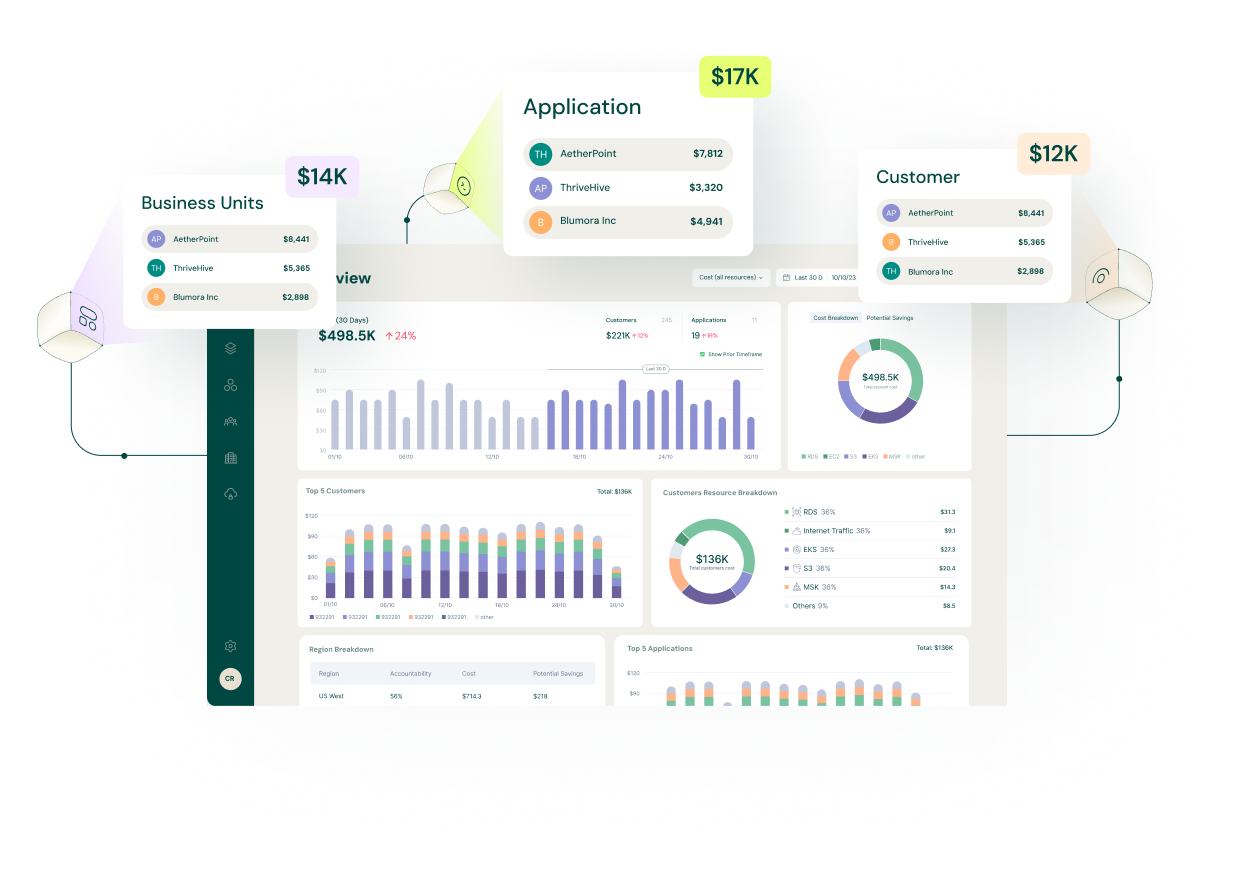
Dashboard displaying financial analytics with bar and pie charts, segment breakdowns for Business Units, Application, and Customer, each with respective monetary values highlighted.

Everything your team needs to see.

AI Cost Attribution

Know which team, customer, or feature is driving your AI spend.

Attribute’s sensor reads directly from LLM API calls, such as Bedrock, Vertex AI, OpenAI, and attributes token consumption to the workload generating it. No manual logging. No prompt wrappers. Just accurate AI cost visibility from day one.

Token-level attribution per customer, feature, or team, not just total LLM spend
Get AI Cost Intelligence
Automated Cost Groupings

Costs grouped by business context automatically

Attribute correlates cloud usage data from multiple sources, including the eBPF sensor, to group every cloud spend by workload, team, customer, or application. No single resource needs to be tagged.
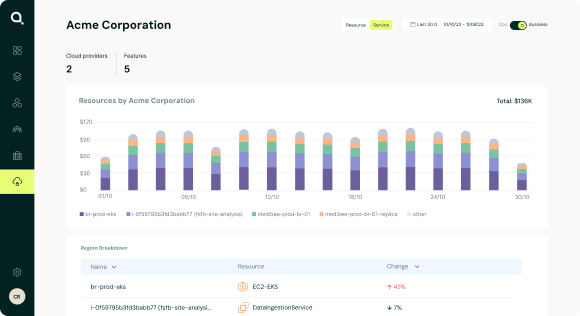
Eliminates blind spots without manual calculations or tagging programs
See it in action
Automated cost groupings dashboard
Business Insights

From cloud bill to profit margin without the manual work

Attribute dramatically shortens the time from raw cloud spend to actionable business insight. Finance and engineering teams see the same data, in business terms, without spreadsheets or manual cost modeling.
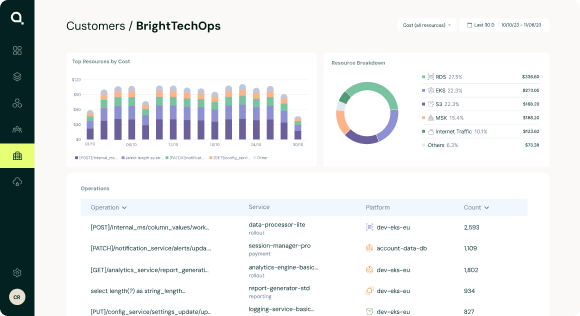
Connects cloud spend directly to revenue impact and customer profitability
Get Customer Costs
Business insights dashboard
Query-Level Visibility

Granular enough for engineering. Clear enough for finance.

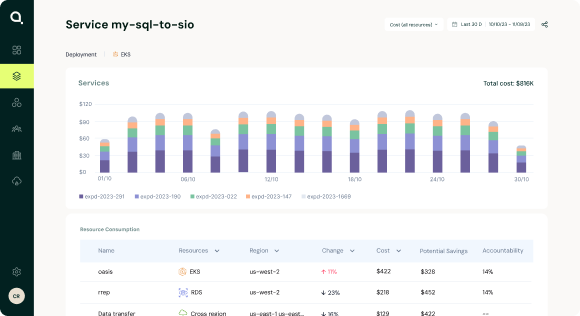
Detailed visibility into every query, data transfer, and object consumed, revealing the exact causes behind changes in your cloud bill. Engineers get the specificity they need. Finance gets the context.
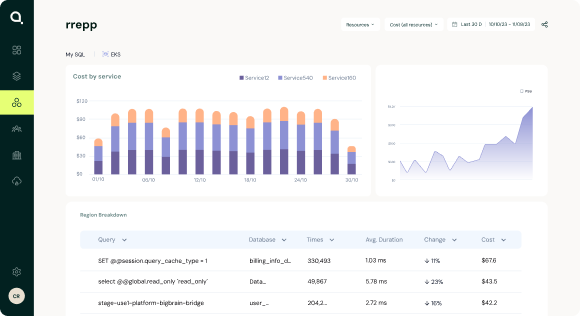
Surfaces the mechanisms behind cost spikes, not just that costs changed
See it in action
Query level visibility dashboard
Shared Resource Allocation

Kafka, Elasticsearch, RabbitMQ, finally visible.

Self-managed infrastructure running on EC2 is a black box to every other FinOps tool. Attribute’s sensor sees inside these workloads and allocates shared costs based on what actually happened, not even splits or rough estimates.
No other FinOps tool can attribute costs inside self-managed infrastructure
Get Team Costs
Shared resources cost allocation dashboard

Traditional tools read old data. We read your live system.

Here’s what changes when you stop relying on billing exports and start reading runtime.

Capability
Tag-based
Traditional Tools
Runtime intelligence
Attribute
Cost attribution method
Billing exports filtered by manually applied resource tags
Based on actual workload behavior
Time to meaningful data
Weeks to months of tagging work before attribution is useful
Immediately after sensor is deployedDay 1
Customer-level cost attribution
No concept of “customers”, cost-to-serve is a manual exercise
Automatically maps cloud spend to each customer across shared infrastructure
Self-managed infrastructure
Invisible; Kafka, Elasticsearch, RabbitMQ on EC2 never appear in billing exports
Visible; eBPF sees inside self-managed workloads
Shared resource allocation
Even splits or rough estimates
Allocation reflects what actually happened
AI cost attribution
Shows total LLM spend only
Consumption-based token allocation per feature, customer, or team
Data freshness
Anomalies surface after the damage is done
Cost is visible as workloads runRuntime
Cost attribution method
Traditional
Billing exports filtered by manually applied resource tags
Attribute
Based on actual workload behavior
Time to meaningful data
Traditional
Weeks to months of tagging work before attribution is useful
Attribute
Immediately after sensor is deployed
Day 1
Customer-level cost attribution
Traditional
No concept of “customers”, cost-to-serve is a manual exercise
Attribute
Automatically maps cloud spend to each customer across shared infrastructure
Self-managed infrastructure
Traditional
Invisible; Kafka, Elasticsearch, RabbitMQ on EC2 never appear in billing exports
Attribute
Visible; eBPF sees inside self-managed workloads
Shared resource allocation
Traditional
Even splits or rough estimates
Attribute
Allocation reflects what actually happened
AI cost attribution
Traditional
Shows total LLM spend only
Attribute
Consumption-based token allocation per feature, customer, or team
Data freshness
Traditional
Anomalies surface after the damage is done
Attribute
Cost is visible as workloads run
Runtime

How it works

Attribute replaces months-long tagging programs with a lightweight runtime sensor

01
15‑minute install.

A lightweight eBPF sensor deploys to your cluster. Immediate time to value with no code or configuration changes

02
eBPF reads runtime data

Automatic cost allocation based on runtime consumption

03
Cost lands where it belongs

Every dollar attributed to the customer, team, feature, or AI agent that drove it.